


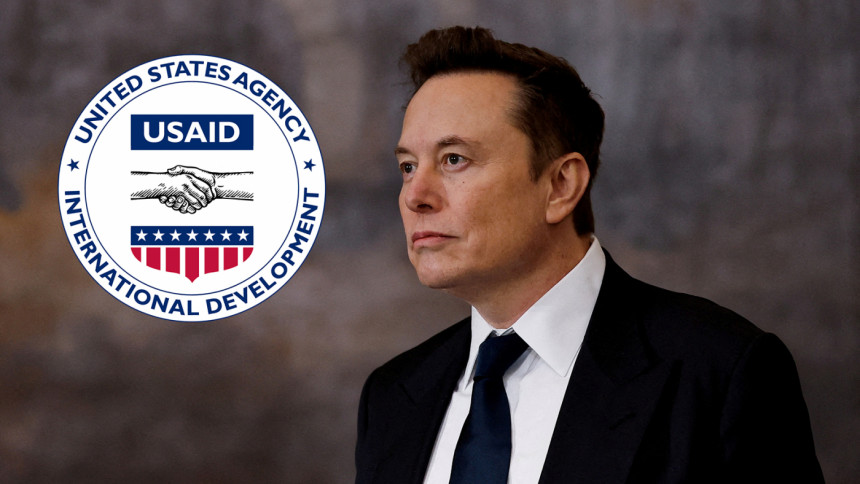

Desk Report: Billionaire Elon Musk, tasked by US President Donald Trump to lead efforts to shrink the federal government, revealed early Monday that his team is working to shut down the United States Agency for International Development (USAID). Musk, who also serves as CEO of Tesla and SpaceX, made the announcement during a social media discussion on X, the platform he owns, as part of an update on the Department of Government Efficiency (DOGE).
Musk, who heads a federal cost-cutting panel appointed by Trump, described USAID as “beyond repair” and confirmed that the president supports its closure. The announcement has sparked widespread concern, given USAID’s role as the world’s largest single donor of humanitarian aid.
USAID’s Global Impact at Risk
USAID disbursed $72 billion in assistance worldwide in fiscal year 2023, funding critical programs such as women’s health in conflict zones, access to clean water, HIV/AIDS treatments, energy security, and anti-corruption initiatives. The agency accounted for 42% of all humanitarian aid tracked by the United Nations in 2024. Its potential shutdown threatens vital projects, including field hospitals in Thai refugee camps, landmine clearance in war zones, and life-saving drugs for millions suffering from diseases like HIV.
The agency employs more than 10,000 people, and its website has been offline since Saturday, with some users unable to access it on Sunday. The move to shut down USAID aligns with Trump’s “America First” policy, which has already frozen most US foreign aid, sending shockwaves across the globe.
Musk’s Broader Cost-Cutting Agenda
During the online discussion, which included former Republican presidential candidate Vivek Ramaswamy and Republican Senators Joni Ernst and Mike Lee, Musk outlined his ambitious plans to reduce federal spending. He claimed the Trump administration could cut $1 trillion from the US deficit next year, though he provided no evidence to support this figure.
Musk also alleged that “professional foreign fraud rings” are stealing vast sums by masquerading as or creating fake digital US citizens. However, he did not elaborate on how these frauds are conducted or how his team plans to address them.
Controversy Over Musk’s Access to Government Systems
Musk’s growing influence in the federal government has raised concerns among lawmakers and critics. Recent reports revealed that Musk’s team has been granted access to sensitive government systems, including the Treasury’s payment network, which handles over $6 trillion annually in federal payments. This system contains personal information for millions of Americans receiving Social Security payments, tax refunds, and other government benefits.
Democrat Peter Welch, a member of the Senate Finance Committee, condemned the move, calling it a “gross abuse of power by an unelected bureaucrat” and evidence that “money can buy power in the Trump White House.” Welch demanded explanations for why Musk was given access to such sensitive data.
Trump’s Support for Musk
President Trump has publicly backed Musk’s efforts, praising him as a “big cost-cutter” and a “very smart guy.” While acknowledging that they may not always agree, Trump expressed confidence in Musk’s ability to reduce the federal budget. “He’s doing a great job,” Trump said on Sunday.
Rapid Changes in Federal Agencies
Since taking office 11 days ago, Trump has initiated a sweeping overhaul of the federal government, firing and sidelining hundreds of civil servants to downsize the bureaucracy and install loyalists. Musk’s team has already assumed control of key agencies, including the Office of Personnel Management (OPM), which manages the personal data of millions of federal employees. Reports indicate that career civil servants have been locked out of OPM’s computer systems, further fueling concerns about transparency and accountability.
Global and Domestic Implications
The potential shutdown of USAID and Musk’s aggressive cost-cutting measures have far-reaching implications. Domestically, critics warn that the dismantling of critical agencies and systems could undermine government operations and erode public trust. Internationally, the loss of USAID’s funding could create a vacuum in global humanitarian efforts, potentially pushing recipient countries closer to other global powers like China.
As Musk and Trump continue their efforts to reshape the federal government, the coming weeks will be critical in determining the future of USAID and the broader impact of their cost-cutting agenda.